
About the Show
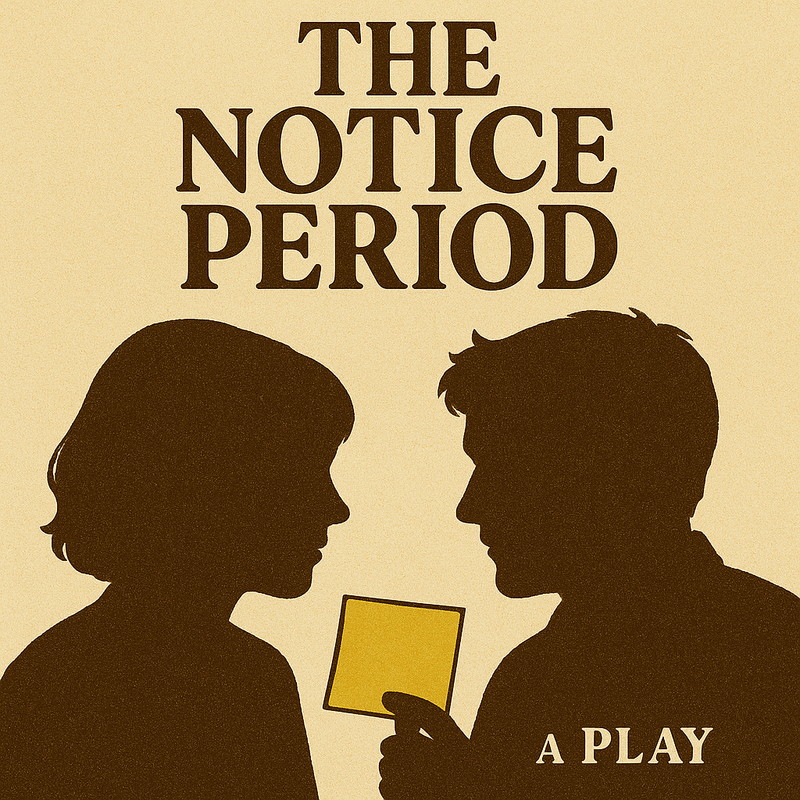
The Notice Period is a 90s New York City stage drama about the wreckage left behind when love ends loudly, abruptly, and without clean punctuation. Eliza returns to her ex-boyfriend Jonah’s cluttered East Village apartment to collect her belongings after a breakup that felt final in volume but unfinished in meaning. What should have been a simple retrieval becomes an emotional audit conducted through objects, memory attaching itself to every corner and loose item. Crates of scratched vinyl records lean like sentimental archaeology, chipped diner mugs once holding jokes now hold ghosts, and spiral notebooks stuffed in drawers brim with unshared feelings written like drafts of either apologies that never reached movement beyond the room. Meanwhile, Bee quietly sub-leases the spare room from a tenant leaving the city, desperate for cheaper rent, a quieter footprint, and a restart negotiated through signatures, not speeches. Bee wants a neutral room that doesn’t vibrate with inherited heartbreak clauses, a clean slate she can afford monthly, but the city might not know to churn without imprinting previous tenants, previous lives, or previous versions of those living inside it. Jonah, stuck in the crossfire of return, plays witness to the packing with a stunned equilibrium masking his own unsaid pages, a writer still trying to translate feeling into sentences that don’t sound like surrender, everyone colliding in overlapping lease agreements, overlapping affections, a psychological pressure cooker where the past sits in stacks of cardboard that don’t know to soften themselves. Outside, subway rattle fills silences like underscoring, payphones ring unanswered, smoke-filled bars hum, horns blare, and sirens function like unwilling dramaturgy pushing inward. The play becomes a reckoning about ownership, rented space, and emotional security deposits paid too late, asking who gets to reclaim a past that still has their signature on the door.
Production Team
